


Demystifying Radio Lingo: Glossary of Must-Know Terms
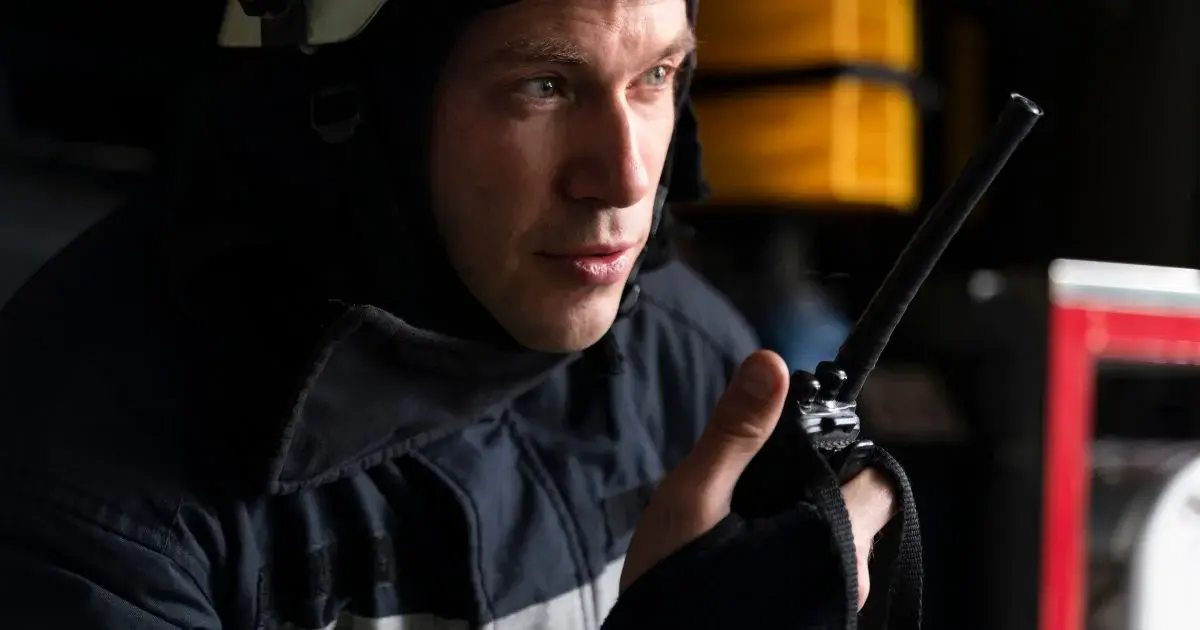
Professional two-way radio systems use special terms that often sound like a foreign language to many users. This technical vocabulary can confuse even experienced teams. It often leads to costly mistakes when selecting equipment or troubleshooting connection issues.
Understanding these terms helps you explain your requirements clearly and select the appropriate system for your operation. You may be upgrading existing equipment or setting up a new solution. Either way, knowing this terminology creates significant advantages.
In this guide, we'll explain key radio terminology that impacts daily operations. From trunked radio systems that manage high-volume traffic to the practical differences between UHF and VHF signals, we'll translate technical concepts into actionable knowledge.
Industry professionals recognize that choosing the wrong radio system can cost thousands in wasted equipment and reduced productivity. A construction manager might select UHF radios for a sprawling site where VHF would provide better coverage. Or a security team might discover their new system lacks encryption they assumed was included.
These misunderstandings create serious operational problems. Mastering these terms goes beyond technical knowledge—it directly affects team efficiency, safety compliance, and financial outcomes.
Radio Frequencies: The Foundation of Clear Communication
UHF vs. VHF: More Than Just Letters
Ultra-High Frequency (UHF) radios operate between 400 and 512 MHz and excel in environments with obstacles. They work best for indoor use or areas with many buildings.
UHF signals travel more effectively around obstacles and through building materials. These higher frequencies handle complex interior spaces better than VHF. However, they offer less distance in open areas.
Very High Frequency (VHF) radios operate between 136 MHz and 174 MHz, delivering superior range in open environments. These lower frequencies travel farther with less power, making them ideal for outdoor operations.
VHF signals provide better coverage in open terrain and penetrate light vegetation more effectively than UHF. However, they perform less effectively with dense building materials and urban interference.
Simplex vs. Duplex: One-Way Street or Two-Lane Highway
Simplex communication means your radio can only transmit or receive at one time – not both simultaneously. This explains why you press a button to talk and release it to listen. Most basic radios function this way.
Duplex systems allow simultaneous transmission and reception, similar to a telephone call. This requires more advanced equipment but enables natural conversation flow. Many trunked systems use duplex technology to improve communication efficiency.
Duplex operation allows for seamless communication without the press-to-talk interruption, making it valuable for complex coordination scenarios where timing is critical.
Trunked Radio Systems: Managing Complex Communications

A trunked radio system shares a pool of frequencies among many users automatically. Unlike conventional radios that dedicate channels to specific groups, trunked systems assign channels dynamically as needed.
The MOTOTRBO Capacity Plus and Capacity Max platforms exemplify trunked solutions that efficiently manage radio traffic across multiple channels and user groups.
Key Trunked System Components:
- Control Channel: The digital traffic director that assigns frequencies when someone transmits.
- Talk Groups: Virtual channels that organize users by department or function.
- Site Controller: The brains of the system that manages frequency assignments.
Trunked systems deliver three major advantages:
- Efficient spectrum use – more users on fewer frequencies.
- Reduced congestion – no more waiting for clear channels.
- Flexible organization – easily add or change talk groups without reprogramming.
For large operations managing multiple departments, trunking eliminates the frustration of busy channels during peak times.
Essential Radio System Components
Repeaters: Extending Your Reach
A repeater receives transmissions. It then rebroadcasts them at a higher power. This extends the range and improves coverage. Repeaters are essential in large facilities, campus environments, and areas with challenging terrain.
Repeaters from Motorola Solutions provide the infrastructure backbone for many professional communication systems, offering both analog and digital operation with high reliability.
Distributed Antenna Systems: Indoor Coverage Solutions
A Distributed Antenna System (DAS) uses multiple antennas connected to a central signal source to provide coverage throughout large buildings. This technology solves dead zone problems in challenging spaces like stairwells and basement areas.
DAS implementations are particularly important in healthcare, education, and manufacturing, where consistent coverage throughout a facility is mission critical.
Digital vs. Analog: More Than Just Sound Quality
Analog radios transmit voice as continuous wave patterns – the technology that's been around since radios were invented. They're simple but lack advanced features and clear audio in weak signal areas.
Digital radios convert voice into binary data before transmission. This delivers clearer audio and better range. It also enables additional features like text messaging. The MOTOTRBO line specifically uses Time-Division Multiple Access (TDMA) that effectively doubles your channel capacity.
Digital systems maintain clear audio quality right to the edge of their range, whereas analog signals gradually degrade, becoming increasingly static-filled before failing completely.
Signal Quality Terms: Speaking the Same Language
RSSI: Understanding Signal Strength
The Received Signal Strength Indicator (RSSI) measures the strength of the radio signal at the receiver, typically displayed in decibels (dB). When conducting RF coverage studies, tracking RSSI throughout a facility helps identify potential dead zones before they become operational problems.
Professional RF coverage studies use RSSI measurements (along with other metrics) to create heat maps of signal strength throughout a facility, which helps optimize antenna placement.
Squelch: Filtering Unwanted Noise
Squelch controls silence unwanted background noise when no one is transmitting. It works by muting the radio speaker until a signal exceeds a preset threshold.
Proper squelch adjustment is crucial in noisy environments. Too tight, and weak calls won't come through; too loose, and constant background noise makes the radio unusable.
Common Radio Features Worth Understanding
IP Ratings: Surviving Real-World Conditions
IP (Ingress Protection) ratings tell you exactly what abuse a radio can withstand. The first number indicates dust resistance (0-6), and the second shows water resistance (0-9).
For example, the Motorola R7 offers IP68 protection – complete dust-tight construction and protection against continuous water immersion. This level of protection is essential in harsh industrial, outdoor, and emergency service environments.
Emergency Features: Beyond Basic Communicatio
Modern radios include safety features that go beyond voice transmission:
- Man Down detection automatically alerts dispatch if a radio remains motionless for a preset time.
- Lone Worker monitoring requires periodic check-ins from isolated team members.
- Emergency Button functionality instantly sends distress signals with location data.
According to the Canadian Centre for Occupational Health and Safety, proper communication protocols and equipment for lone workers are essential safety components in many industries.
Practical Communication Planning
Fleet Mapping: Organizing Your Radio Traffic
Fleet mapping is the process of planning how different departments will use available channels or talk groups. It's essentially creating the blueprint for who talks to whom across your operation.
Proper fleet mapping ensures departments like maintenance, security, and operations can communicate separately for routine matters but coordinate during emergencies or special situations.
Coverage Studies: Know Before You Deploy
An RF coverage study uses advanced testing to predict where your radio signals will reach reliably and where they might encounter problems. This testing identifies dead zones before they impact operations.
Coverage studies typically include both predictive modeling and on-site verification to ensure theoretical calculations match real-world performance.
The Future of Radio Communication
Digital Mobile Radio: The Current Standard
Digital Mobile Radio (DMR) is the widely adopted digital standard that enables advanced features like text messaging, GPS tracking, and doubled channel capacity. The MOTOTRBO line uses DMR technology to deliver these capabilities in a backward-compatible package.
DMR is an open standard defined by the European Telecommunications Standards Institute (ETSI), ensuring compatibility across compliant devices from different manufacturers.
Push-to-Talk over Cellular: Beyond Traditional Radio
Push-to-Talk over Cellular (PoC) extends radio-like communication to cellular networks. This technology creates a nationwide communication range while maintaining the immediate, one-button simplicity of traditional radios.
Hybrid systems using both conventional radios and Broadband PTT allow organizations to maintain the best of both worlds – dedicated local radio systems with the extended reach of cellular networks.
This technology is particularly valuable for teams that travel between multiple sites or operate across large geographic areas. Utility companies with field technicians, regional delivery services, and multi-site security operations all benefit from the seamless coverage.
The ability to integrate with dispatch software, GPS tracking, and team management tools makes PoC an increasingly popular option for organizations looking to modernize their communication infrastructure while maintaining the simplicity and reliability of traditional radio systems.
Making Radio Terminology Work for You
Understanding radio terminology helps you communicate clearly about your operational needs and avoid costly system mistakes. When you can speak confidently about frequencies, features, and system designs, you're more likely to get equipment that actually works for your specific challenges.
Radio licensing in Canada falls under the jurisdiction of Innovation, Science, and Economic Development Canada (ISED), which manages the frequency spectrum and sets regulations for the use of radio equipment.
MRC Wireless has been providing professional radio communication solutions for nearly three decades. As an authorized Motorola Solutions channel partner, we help organizations across Ontario select, configure, and maintain communication systems that solve real operational problems.
Whether you need a simple portable radio setup or a complex trunked system spanning multiple sites, we're here to help cut through the technical jargon and build a communication solution that keeps your team connected when it matters most.
For more information about how two-way radios can benefit specific industries, read our articles on Two-Way Radio Systems for Schools and Why Two-Way Radios Outperform Cell Phones in Manufacturing.
Contact us today to speak with our team about your communication challenges and discover how the right radio system can transform your daily operations.