


5 Simple Habits to Make Your Two-Way Radio Batteries Last

Your crew's radios die halfway through the shift. Again. Someone forgot to swap batteries before heading out. Now your warehouse supervisor walks back to the charging station when trucks line up at the loading dock.
Dead batteries create real problems: missed coordination, safety gaps, and time wasted hunting for charged units. Most teams blame the batteries themselves, but the real issue is how those batteries get used and maintained daily.
Professional two-way radio batteries can last for years with proper care. The IMPRES batteries in systems like the MOTOTRBO R7 and Ion are built for demanding industrial use. They'll reliably power through entire shifts. But only if you treat them right.
These five habits extend battery lifespan significantly while keeping your team connected when it matters most.
1. Stop Leaving Batteries on Chargers After They're Full
Your radios sit in chargers overnight. Every night. That constant trickle charge damages battery cells.
Lithium-ion batteries don't need to stay plugged in once charged. The chemistry degrades faster when held at 100% charge for extended periods. Heat from the charger compounds the problem. After months of this pattern, batteries that should last 18 hours barely make it through 12.
What does that look like operationally? Your forklift operator discovers mid-shift that his radio won't make it to the end of the day. He heads back to swap batteries during the afternoon rush. Meanwhile, the loading dock supervisor can't reach him about an urgent shipment change. The communication gap creates exactly the kind of delay that costs time and creates safety risks.
Smart charging systems like IMPRES technology help. They monitor battery condition and automatically adjust charging. But even smart chargers work better when batteries come off after reaching full charge.
Set a routine. Charge overnight, pull batteries in the morning. Use multi-unit chargers with timers if your operation runs 24/7. The goal is to reach full charge without unnecessary time spent at maximum capacity.
This single change adds months to battery lifespan. Cells maintain capacity longer. Performance stays consistent across shifts.
2. Use the Right Charger for Your Battery Type
Not all chargers work the same way. Using the wrong one damages the batteries you're trying to maintain.
Standard chargers apply a steady current until batteries reach full voltage. They work fine for basic applications. But they can't adapt to different battery conditions or chemistries. A battery that's hot from heavy use gets the same charge rate as one sitting cold overnight.
IMPRES chargers communicate with compatible batteries throughout the charging cycle. They track battery health, adjust rates based on temperature, and store conditioning data. This intelligent approach charges cells efficiently without overheating or overcharging.
Motorola Solutions' battery care documentation shows IMPRES batteries charged on IMPRES chargers last up to 150% longer than the same batteries on standard chargers. The technology actively extends lifespan through smarter charging.
Mixing systems creates problems. An IMPRES battery on a standard charger loses its conditioning benefits. A standard battery won't communicate with an IMPRES charger. Match your charging equipment to your battery technology for best results.
3. Keep Batteries Clean and Contacts Clear
Dust and grime build up on battery contacts over months of daily use. That buildup blocks the proper connection between the battery and radio. It also interferes with charging.
Poor contact creates resistance. The radio draws more power trying to maintain performance. The battery drains faster than normal. Charging becomes inconsistent. You might think the battery is failing when, in reality, it just needs cleaning.
Wipe contacts monthly with a dry cloth. For stubborn buildup, use isopropyl alcohol on a cotton swab. Make sure contacts are completely dry before inserting batteries into radios or chargers.
Check radio contacts too. Metal-on-metal wear can cause oxidation that appears as light corrosion. Clean it the same way you'd clean battery contacts.
This takes maybe five minutes per radio. It prevents connection problems that appear to be a battery failure. Clean contacts mean reliable power transfer and consistent charging.
4. Don't Wait Until Batteries Are Completely Dead
Running batteries down to zero regularly shortens their lifespan. Lithium-ion chemistry performs best with partial discharge cycles rather than complete drains.
Deep discharge creates stress on battery cells. The Canadian Centre for Occupational Health and Safety tracks workplace equipment reliability. Their research shows batteries that regularly drain to zero fail significantly faster than batteries swapped at 20-30% remaining. Each full drain-to-dead cycle ages cells faster than several partial discharge cycles.
Swap batteries when they hit 20-30% remaining. Keep spare batteries available so teams can swap mid-shift if needed. The MOTOTRBO R2 uses high-capacity batteries rated for 26.5 hours of operation in digital mode. Plan swaps before they run dry.
Some operations track battery levels through IMPRES data. The system logs discharge patterns and flags batteries that drain unusually fast. This catches failing batteries before they leave someone without communication during critical moments.
Partial discharge cycling also maintains more consistent performance. Batteries hold voltage better throughout their usable range. Your radios maintain full transmit power longer into each shift.
5. Store Batteries Properly When Not in Use
Batteries left uncharged for weeks deteriorate faster than batteries in regular use. But storing them fully charged also degrades cells over time.
The ideal storage charge level sits around 40-50%. This reduces stress on cell chemistry while preventing deep discharge damage. If you're putting radios away for seasonal shutdown or maintaining spare equipment, charge batteries halfway before storage.
Temperature matters significantly. Research from the National Renewable Energy Laboratory found that heat speeds up battery degradation. A battery stored at 30°C loses capacity twice as fast as one kept at 20°C. Storage above 25°C accelerates chemical reactions that degrade cell materials.
Store batteries in cool, dry locations away from direct sunlight. Avoid vehicle cabs during summer or equipment sheds without climate control. Room temperature is fine. Freezing temperatures don't damage Li-Ion batteries, but charge them at room temperature before use.
Construction companies storing equipment over winter need to pay attention here. Radios stored in unheated sheds from November through March should have their batteries removed and stored separately at moderate temperatures. The same goes for seasonal operations like landscaping or event management that shut down for months at a time.
Check stored batteries every few months. If the voltage drops too low, cells can become permanently damaged. A quick top-up to 50% keeps them healthy during extended storage periods.
When Battery Replacement Makes Sense
Even with perfect maintenance, batteries eventually wear out. Knowing when to replace them prevents communication failures during critical operations.
IMPRES systems track battery health automatically. They count charge cycles and measure capacity retention. When a battery drops below 80% of its original capacity, the charger flags it. That's your signal to order replacements before performance becomes unreliable.
Without IMPRES tracking, watch for these signs: significantly shorter runtime despite full charges, batteries that feel unusually warm during normal use, or physical damage such as swelling or cracks. Any of these means immediate replacement.
Waiting too long to replace aging batteries creates operational risks. A battery that dies during an emergency response leaves your safety coordinator unable to coordinate evacuation. A forklift operator loses contact during a near-miss incident. The cost of a new battery is negligible compared to the cost of a communication failure during a critical moment.
Budget for battery replacement as regular maintenance. Most professional batteries last 18-24 months with daily use. High-intensity operations see faster wear. Track purchase dates and plan replacements before failures happen.
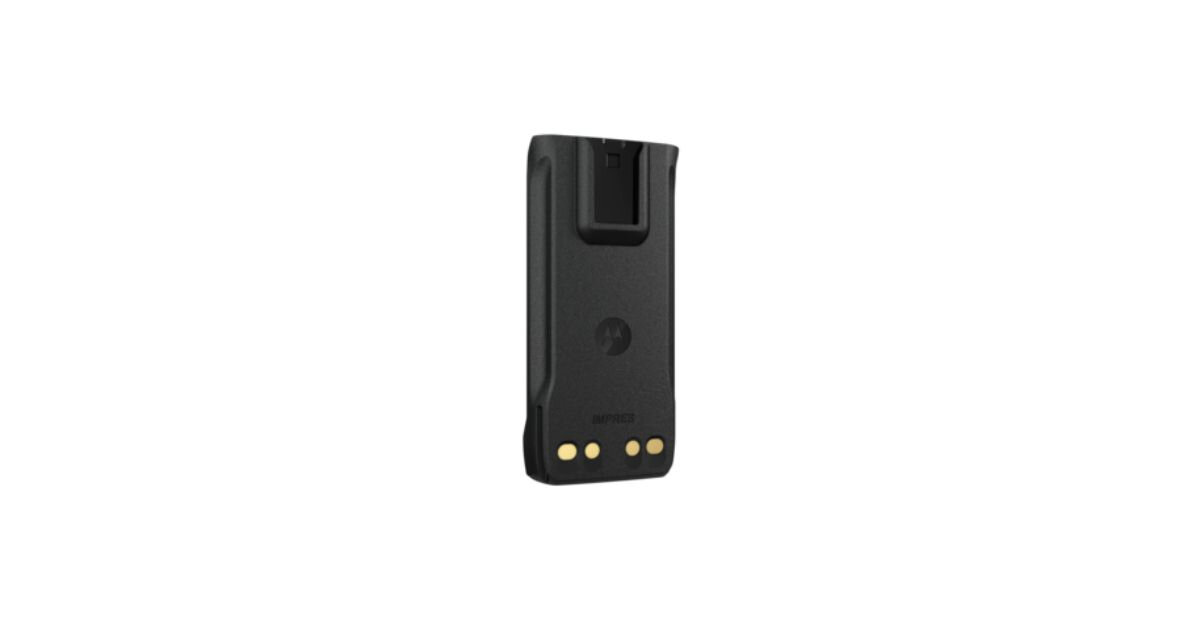
Quality batteries cost more upfront but deliver better value over their lifespan. The PMNN4809 batteries used in the R7 are built for harsh industrial environments. They maintain performance longer than consumer-grade alternatives. Learn more about the R7's advanced features and battery technology.
Battery Technology Keeps Improving
Newer radio systems include battery management features that older models lack. Smart charging. Health tracking. Automatic calibration. These advances make battery care simpler while extending lifespan.
The MOTOTRBO Ion combines voice communication with Android functionality, all powered by advanced IMPRES 2 battery technology. Its PMNN4803 battery delivers 2820mAh capacity with intelligent power management. The system monitors usage patterns and adjusts performance to maximize battery life without compromising communication quality.
Digital radios also use power more efficiently than analog models. The R2 delivers up to 26.5 hours of operation on a single charge in digital mode. That's full-shift coverage with room to spare. Discover why digital radios outperform older analog systems.
When evaluating new radio systems, battery performance deserves attention alongside communication features. Longer runtime means fewer mid-shift swaps. Better battery management reduces replacement costs. These factors add up to significant operational savings.
Building Better Battery Habits
These five habits work because they address how batteries degrade. Reducing heat exposure. Avoiding stress from deep discharge. Maintaining clean connections. Using appropriate charging technology. Storing properly between uses.
None of these requires major investment or complicated procedures. They're simple maintenance practices that become routine after a few weeks. The payoff shows up in extended battery lifespan, consistent performance, and fewer communication gaps during critical operations.
Professional radio batteries represent a real investment. The IMPRES batteries in Motorola systems aren't cheap. But with proper care, they deliver years of reliable service. That makes them far more cost-effective than replacing cheaper batteries every few months.
Your team depends on reliable communication. Battery failures create gaps that affect safety, productivity, and coordination. Taking care of batteries isn't about following rules. It's about maintaining the tools your operation depends on daily.
Keep Your Team Powered Through Every Shift
Battery care directly affects operational reliability. When your radios stay powered all day, teams stay connected, coordination improves, and work flows smoothly from start to finish.
Contact us to evaluate battery performance across your radio fleet. We'll assess your charging setup, identify what's draining batteries early, and recommend solutions that keep your team connected.