


How to Audit Your Plow Fleet Communications Before Winter Hits
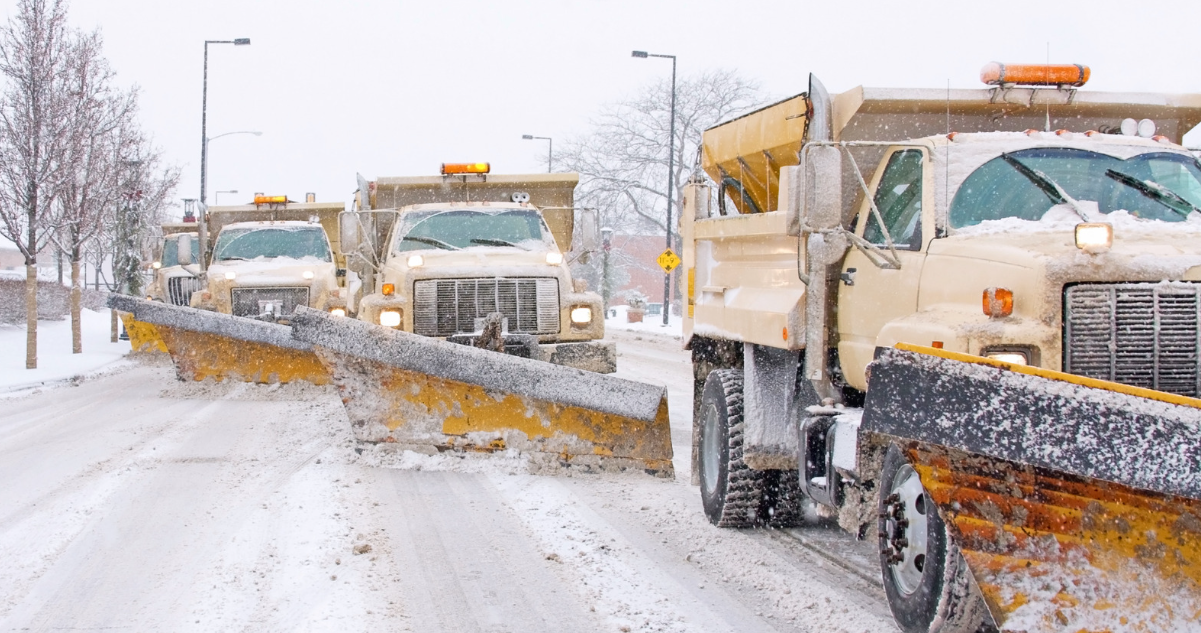
The antenna mount on a plow truck takes a beating that nobody inspects. Salt spray gets into the coaxial connector in January. Freeze-thaw cycles loosen the mounting hardware by March, and the truck sits all summer with moisture in the cable.
At the start of the season, the radio powers up, the driver hears the yard, and the truck goes back on the schedule. It's transmitting at a fraction of its original range, and nobody finds out until the far end of a route. A yard check can't see that part of your plow fleet communications.
An audit that's worth the afternoon follows the truck. It examines the installation, the route, the licence, and the trucks you haven't added yet. You can complete most of it with your own drivers before the first salting run.
What Salt and Freeze-Thaw Do to a Truck Install
A mobile radio in a plow truck deteriorates from the outside in. The radio itself sits dry under the dashboard and usually outlasts the vehicle. The antenna, the cable, and the power lead operate in brine from December to April.
Start on the roof or the mirror bracket, then grab the antenna base and try to rotate it by hand. If it moves, the ground connection behind it has corroded, and the radio is pushing power into a mismatched antenna.
Then follow the coaxial cable to the radio. Look for green corrosion on the connector, a crushed section where it passes through the door seal, and any previous splices. A cable that absorbed moisture last winter still passes a yard check, because the yard is 200 metres away.
Digital radios make this deterioration harder to catch. Analog audio becomes progressively noisier as the signal weakens, so operators complain early. Digital audio remains intelligible until it cuts out entirely, and a damaged antenna provides no warning before that point.
A technician with a wattmeter measures reflected power at the antenna connector, which shows damage a radio check can't. Any vehicle with a high reading needs its cable or antenna replaced before the season.
The electrical supply is the third area to inspect. Plow hydraulics, strobes, and salter controllers all draw from the same electrical system. A radio on a shared circuit picks up their interference, which drivers hear as a buzz when the spreader operates.
A proper in-vehicle radio installation runs fused power directly from the battery and keeps the coaxial cable separated from that wiring. If a truck changed ownership or received a new salter over the summer, assume someone relocated the wiring.
Audit Plow Fleet Communications from the Far End of the Route
The only coverage test that counts happens where the truck operates. Put a driver in each truck, send them to the farthest location on the route, and have dispatch call. Then have the driver call back from inside the cab with the plow up and the engine running.
Write down every location where either side has to repeat a transmission. Those are the radio dead zones on plow routes that appear during storms. They typically sit behind a hill, in a parking lot below road grade, or beside a steel-clad warehouse.
Note which direction fails, because the usual pattern is one-way, where the driver hears dispatch and dispatch hears nothing back. That usually points to the truck's antenna or cable, because the repeater is clearly transmitting.
A driver clearing a parking lot alone at 3 a.m. is a lone worker, whatever the org chart says. CCOHS guidance on working alone asks whether emergency communication will work properly in every situation the worker faces. For a plow driver, every situation includes the back corner of that commercial lot.
You don't need us for this test, because a dealer's bench check repeats what the yard check found. The route run costs you one unproductive shift and a clipboard, and it identifies more problems.
We earn our keep with the next step, once you have the list. Some dead spots need an antenna relocated on one truck. Others require an additional repeater site, and a few can't be fixed at a reasonable price.
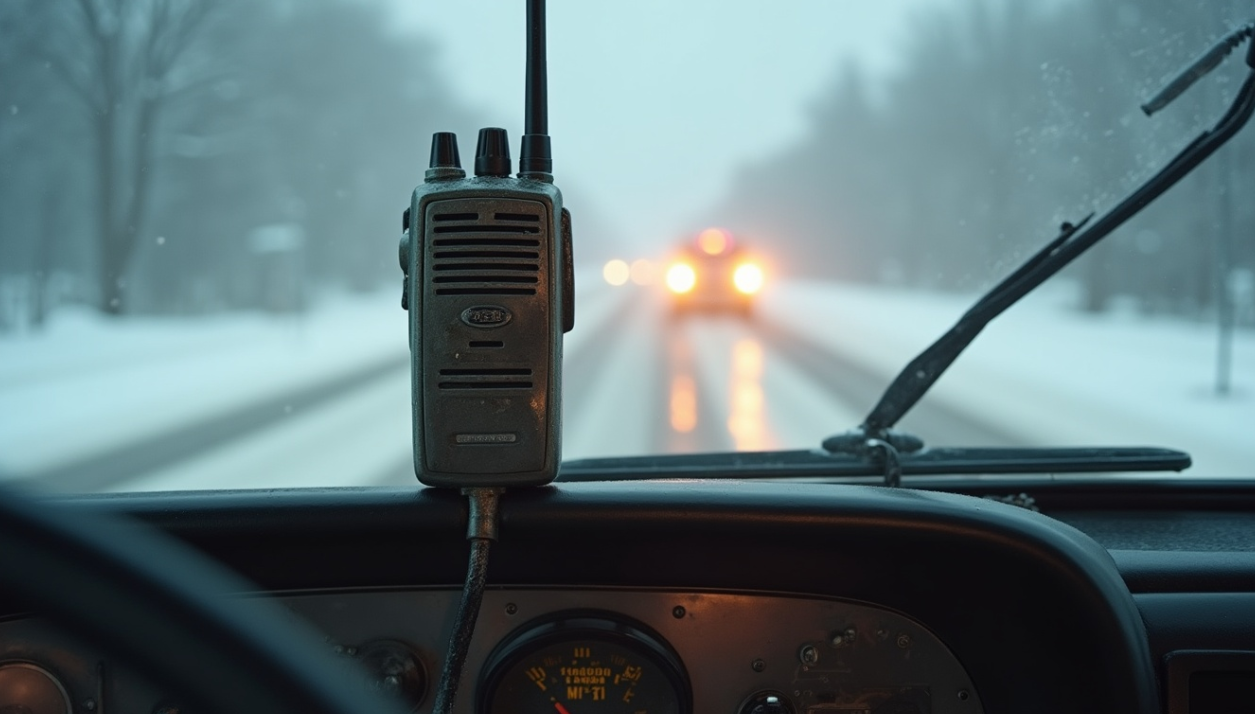
The Trucks You Haven't Added Yet
A new commercial contract comes through just as the winter season begins. By mid-November, you've added six subcontractor trucks, and each one requires a radio that communicates with your dispatch.
Two-way radios for snow removal contractors only work as a system when every truck is on it, including borrowed ones. ISED licensing is the first thing to check.
A land mobile licence authorizes a stated number of mobile stations, and six additional trucks can exceed it. Raising that number means modifying your land mobile licence with ISED, so count vehicles now and file the application early. The licence also names your area of operation, so a contract in another municipality deserves the same review.
The radios are the second problem, because subcontractors arrive with equipment programmed for another company's system, or not programmed at all. Buying six radios for trucks you'll release in April rarely pays for itself. For subcontractors who return every winter, the calculation changes, and our comparison of renting and buying two-way radios shows where.
Two-way radio rentals for the winter season cover that seasonal gap, once each unit is programmed to your channels. The catch is availability, because demand for rental radios peaks when snow contracts start in November.
An Unreachable Truck Costs More Than the Service Call
During a storm, your dispatcher spends part of every hour locating trucks. A driver doesn't answer, so dispatch calls again, tries a cell phone, then asks another driver to swing past. Nobody records those minutes.
Municipal fleets feel it against a regulatory clock. Ontario's minimum maintenance standards for municipal highways set a clearing deadline for each highway classification once the snowfall ends. A truck that sits silent for forty minutes spends forty minutes of that deadline.
Private contractors carry equivalent exposure in a different form. The property manager's contract specifies a service window, and the evidence you met it is whatever dispatch can document.
GPS tracking on the radio network answers the location question without a voice transmission. Dispatch sees Truck 7 stationary at the north lot and knows the driver is out clearing a doorway by hand. Ask whether your system keeps that location history, because a liability claim in March will depend on it.
Test the Night Shift Version of Your System
A radio system has a day configuration and a storm configuration, and most inspections only examine the first. Run one test after business hours, with the office dark and the night dispatcher on a portable.
Press the emergency button in one truck and observe where the alert lands. On some systems, it lands on a desk console that nobody monitors overnight.
Then disconnect hydro to the base radio. An ice storm that drops power lines arrives on a night when every vehicle is deployed. A repeater without battery backup takes the entire fleet off the air with it. Ask how long the battery or generator carries the repeater, and when a technician last tested it.
Where Wide-Area Coverage Stops
Contract territories grow faster than radio systems do. A Kitchener contractor acquires a retail chain with sites in Guelph, Milton, and Listowel, and one repeater can't follow.
Fleet Connect coverage in Southwestern Ontario extends from Kitchener to Mississauga and from Hamilton up to Hanover. Inside that area, a truck roams between sites without the driver touching a channel selector. Outside it, the radio goes quiet, so compare your site list against the Fleet Connect coverage map before you bid.
For sites past that edge, push-to-talk over cellular reaches anywhere a phone does and fails anywhere a phone does. Our earlier article covers how cell phones behave for snow contractors in a storm. We don't have a satisfactory answer for a fleet with two trucks in Owen Sound.
Some contractors run both systems and accept two devices in those cabs, and others give up the sites.
Cold Batteries and the Crews Outside the Cab
Sidewalk crews and loader operators carry portable radios, and portables fail differently. A battery that lasted an entire shift in September won't last one at minus fifteen.
Pull every portable battery, check the manufacturing date code, and retire the ones that no longer last an entire shift. Then examine how the crews carry the radios. A portable riding in an outer pocket fills with slush, and an IP54 rating wasn't designed for immersion.
The MOTOTRBO R7 carries an IP68 rating, which covers submersion in a slush puddle and a rinse afterward. New radios come with free programming, so replacements arrive on your channels.
Don't Wait for the First Major Storm to Find Problems
November is when winter preparations turn into real-world demands. A corroded connector or weak antenna might seem like a minor issue now, but during a major snowfall, it can mean an unreachable driver and costly delays.
Even if your fleet is already on the road, there's still time to identify coverage gaps, inspect equipment, and address communication issues before winter conditions intensify.
Contact our Kitchener shop to review your fleet's communication needs. We'll help you identify potential problems and keep your crews connected when it matters most.


