


Crane to Ground: Using UHF & Digital Mobile Radio in Construction

A crane operator spots a problem several stories up. The load is swinging near power lines, and the ground crew needs to stop immediately and reposition. His spotter can't hear him over the diesel generators. Hand signals get lost in the glare.
Someone runs over to relay the message. By then, those steel beams have drifted closer. When you're moving materials vertically across multiple floors, every second of delay multiplies risk.
Digital mobile radio systems solve what cell phones and hand signals can't. UHF signals penetrate concrete and steel. Digital audio cuts through equipment noise. Crane operators, ground crews, and site supervisors stay connected instantly, even when crews are spread across active zones.
In this post, we'll explain why UHF and digital mobile radio matter for crane operations and why they work when other tools fail.
Why Cell Phones Fail on Construction Sites
Cell phones seem like an obvious communication solution since everyone already carries one. Construction sites expose their limitations fast. Touchscreens don't work with gloves.
Crane operators can't fumble with a phone while controlling loads, and ground crews wearing work gloves struggle to answer calls or read texts. That delay matters when materials are suspended overhead.
Dead zones appear in partially completed buildings. Steel framing blocks signals, and concrete floors create interference. Basement areas and stairwells lose connection entirely. Your phone might work at street level but fail three floors up.
Battery life becomes a problem during long shifts. Phones drain fast in cold weather, and by late afternoon, batteries start dying when coordination matters most.
Network congestion hits during peak hours when the entire site tries to use data simultaneously. Connections slow down, important calls drop, and messages arrive minutes late. Construction schedules don't accommodate delayed communication.
UHF Construction Radios Handle Building Environments
UHF construction radios operate differently from cell phones. They use Ultra High Frequency signals between 400 and 512 MHz. These frequencies behave better around obstacles.
They push through concrete walls, steel beams, and metal decking. A crane operator working on the upper floors stays connected to ground crews in the foundation. The shorter wavelengths of UHF work well in dense urban sites where buildings reflect signals, creating coverage where cell service fails.
Professional two-way radios operating on UHF frequencies maintain clear communication across active construction zones. The MOTOTRBO R7 delivers reliable performance in harsh conditions. It handles drops, dust, and temperature swings that would destroy consumer electronics.
Range stays consistent throughout the day. Unlike cell phones that depend on distant towers, UHF radios communicate directly or through on-site repeaters. Coordination stays reliable regardless of carrier network congestion.
Professional radio systems operate on licensed frequencies coordinated through Innovation, Science and Economic Development Canada. This ensures reliable performance without interference from consumer devices.
Two-way radios outperform cell phones in demanding industrial environments. Similar challenges affect both manufacturing plants and construction sites.
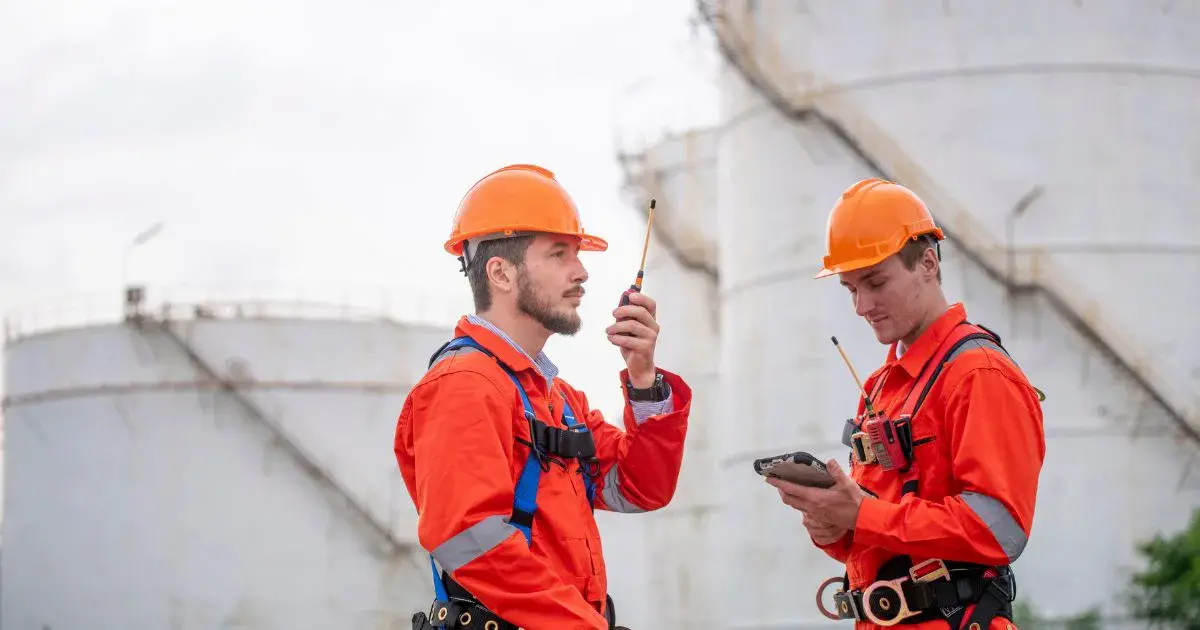
Digital Mobile Radio Cuts Through Construction Noise
Construction sites generate constant background noise. Jackhammers, concrete saws, generators, and heavy equipment create conditions where standard radios struggle to deliver clear audio.
Digital mobile radio technology processes audio differently than analog systems. It converts voice into digital signals that filter out background noise. Clear communication happens even when standing next to running equipment.
The MOTOTRBO Ion combines digital clarity with smart device capabilities. When voice communication isn't practical, crews can send text updates. Intelligent audio automatically adjusts volume based on ambient noise. When a crane operator moves from the quiet cab to the noisy deck, the radio compensates without manual adjustment.
The MOTOTRBO R2 includes noise suppression technology that maintains clear audio in loud environments. This matters when crane operators need to hear instructions the first time, not request repetition while loads are suspended.
Crane to Ground Communication Requirements
Crane-to-ground communication requires more than basic radio contact. Operators need constant awareness of ground conditions, weather changes, and crew positions.
Load spotters guide crane operators through complex lifts by describing clearances, identifying obstacles, and confirming safe paths. This conversation continues as materials move through the air. Ground crews coordinate material staging and delivery timing. They tell crane operators when loads are ready, where they're going, and any last-minute changes.
Site supervisors monitor multiple cranes simultaneously and need to hear what's happening across different zones. Group calling features let them broadcast updates to everyone at once. Weather monitoring requires immediate communication, as wind speeds change rapidly at higher altitudes. This affects what can be safely lifted and moved.
Multi-Floor Construction Communication Challenges
Multi-floor construction creates unique challenges as buildings rise and teams spread vertically across multiple levels. Coordination becomes more complex with each added floor.
Material delivery requires precise timing between floors. A crane loads steel beams on floor eight while crews on floor six need concrete forms. Everyone needs to know what's moving, when, and where it's going.
Safety zones shift constantly during vertical construction. When crane operators swing loads over occupied areas, they need confirmation that crews have cleared the path. Elevator shafts and stairwells become communication dead zones where cell signals disappear entirely.
Understanding which radio frequency penetrates building materials most effectively helps explain why UHF signals work better than cell phones in these areas. Crews moving between floors stay connected throughout transitions.
The compact MOTOTRBO R2 works well for workers moving frequently between levels. It's lightweight enough to wear all day but rugged enough to survive construction conditions.
Safety Improvements with Digital Radio Systems
Construction sites need reliable communication to prevent accidents. Someone didn't hear a warning. A message arrived too late. Equipment was moved before crews cleared the area. These scenarios happen when communication systems fail under pressure.
According to the Canadian Centre for Occupational Health and Safety, lone workers—including those on construction sites—need established check-in procedures and communication equipment to stay safe. Crane operators working in elevated cabs and ground crews spread across isolated zones often work without direct visual contact. They're separated from supervisors or teammates.
Digital mobile radio reduces these risks through reliable, instant communication. When a crane operator spots a hazard, their message is relayed to ground crews and supervisors immediately. Clear audio means warnings get heard the first time. Group calling ensures everyone in the affected zone receives the alert simultaneously.
Professional radio systems also support better documentation of site communications. Clear communication protocols help teams identify hazards before they cause injuries, supporting continuous improvement across construction operations.
Interference and Coverage Considerations
Construction sites create challenging RF environments. Metal structures reflect signals, concrete absorbs them, and equipment generates electrical noise that interferes with communication.
RF coverage studies identify problem areas before installation. Testing shows where signals will reach and where additional equipment is needed. This prevents the discovery of dead zones after crews already depend on the system.
Distributed Antenna Systems extend coverage throughout large job sites. Antennas placed strategically across the site ensure consistent communication from the basement to the rooftop. Repeaters boost signals across sprawling sites. A single powerful repeater can potentially cover several city blocks or multiple acres of industrial construction, depending on terrain and antenna placement.
The DTR700 offers an alternative for smaller sites. It operates on 900 MHz frequencies designed for interference-free communication. This makes setup simpler for projects that don't require wide-area coverage.
Real Implementation on Active Sites
Installing two-way radios for construction sites requires planning that minimizes disruptions while ensuring coverage where crews work. Temporary mounting works during the early phases. Antennas attach to existing structures or temporary poles.
As buildings rise, antenna placement shifts to match the evolving layout. Testing happens during off-hours to confirm coverage without interrupting crane operations. Training covers essential functions first.
Crane operators learn basic protocols and emergency procedures before advanced features. Battery management becomes part of the daily routine, with charging stations near break areas keeping radios powered throughout shifts. Spare batteries allow quick swaps without communication gaps.
When to Upgrade Construction Communication
Repeated close calls involving crane operations signal coordination problems. If ground crews regularly can't reach operators, your system isn't working.
Project size matters. Small residential jobs might manage with basic radios. Multi-crane operations on commercial towers need professional two-way radios with digital capabilities.
Weather impacts exposed sites. If wind or rain disrupts communication, you need more reliable equipment. Construction can't stop when conditions get rough.
Site layout creates dead zones. Buildings going up in L-shapes, U-shapes, or around courtyards challenge coverage. When crews lose contact moving between sections, professional RF planning solves it.
MRC Wireless Builds Construction Communication Systems
MRC Wireless designs radio systems for construction operations across Ontario. We understand the specific demands of crane-to-ground communication and multi-floor job sites.
RF coverage studies map your site before installation. We identify where signals need boosting and plan antenna placement that works as construction progresses. This prevents coverage gaps that slow work and compromise safety.
Our technicians handle installation around active construction schedules with minimal disruption to ongoing operations. Training programs prepare your crews to use professional two-way radios effectively from day one. We focus on practical operation and emergency procedures that matter during crane lifts and material handling.
Keep Crane Operations Safe and Coordinated
Construction sites need reliable communication between crane operators and ground crews. When materials move vertically across floors, instant coordination prevents delays and maintains safety. Cell phones and hand signals fail in the noise, distance, and complexity of active sites.
Digital mobile radio with UHF technology delivers the clear communication construction teams need. Systems work through concrete and steel, cut through equipment noise, and connect crews from basement to rooftop.
Contact our team to assess your construction site communication needs. We'll evaluate your layout and identify potential dead zones. Our systems keep crane operators and ground crews connected throughout every phase of construction.